Real Food vs Processed Food: 7 Powerful Habits for Better Workday Energy
For busy professionals, real food vs processed food is not a question of eating perfectly. It is a practical way to make daily choices that support steadier energy, clearer focus, and healthier habits—even when work is demanding.
In In Defense of Food, Michael Pollan makes a useful distinction between food and what he calls “edible foodlike substances.” His core message is simple: build your diet around foods that still resemble where they came from, instead of relying mainly on products designed for convenience, shelf life, and constant consumption.
The goal is not to eliminate every packaged product from your life. The goal is to make better defaults more often.
Table of Contents
- What real food actually means
- Why processed food is not always the enemy
- Why food choices matter during busy workdays
- Seven practical habits to improve your nutrition
- How to build a realistic real-food routine
What Does Real Food vs Processed Food Mean?
The conversation around real food vs processed food becomes confusing when every packaged item is treated as unhealthy. That is not accurate, and it is not practical.
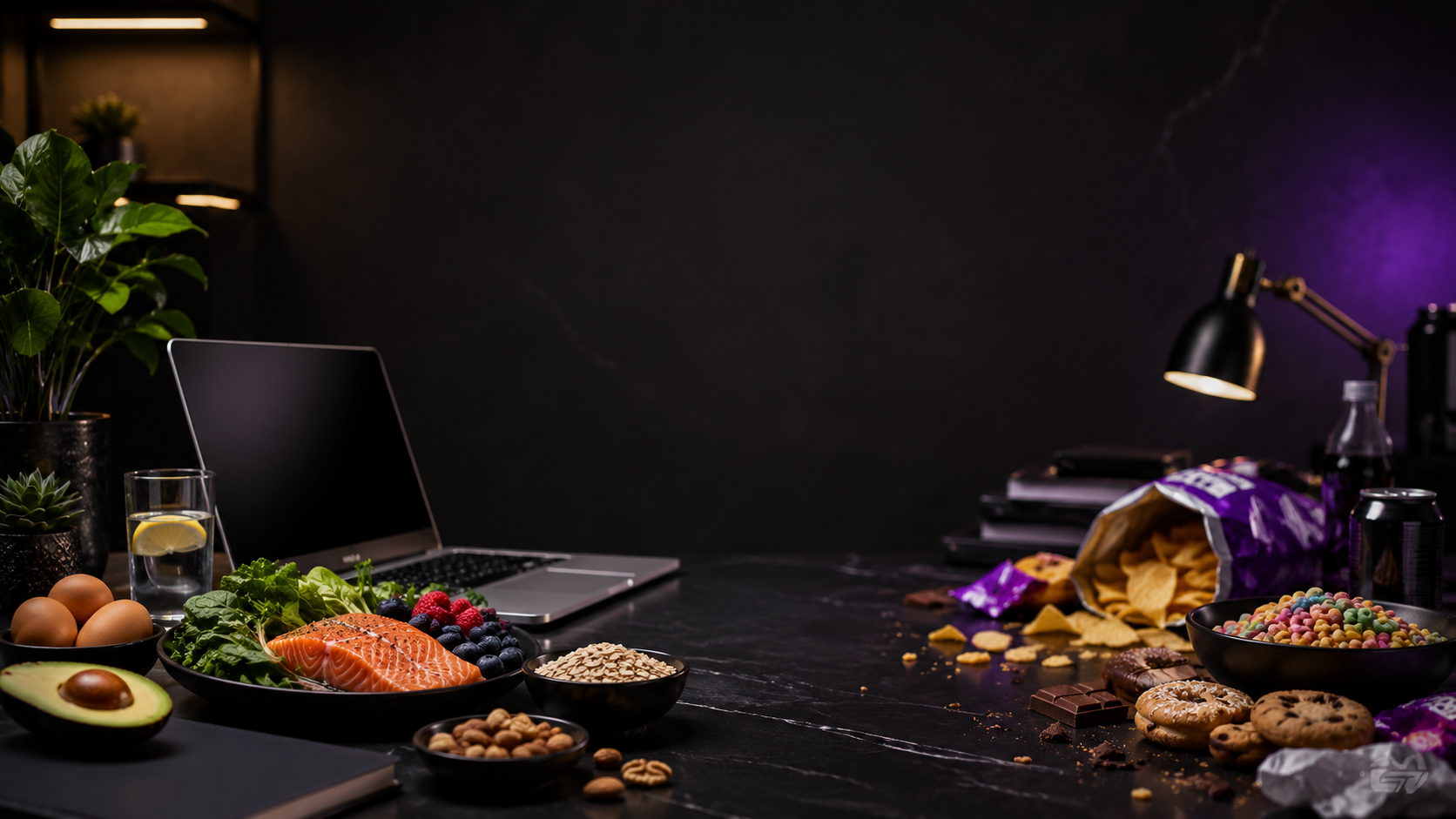
Real food generally means foods that are close to their original form. Think fruit, vegetables, eggs, fish, plain yogurt, oats, beans, nuts, seeds, whole grains, potatoes, and minimally processed proteins.
These foods are recognizable. You can usually identify where they came from, how they were prepared, and how they can fit into a meal.
Processed food exists on a spectrum.
Frozen vegetables, canned beans, pasteurized milk, plain Greek yogurt, and whole-grain bread have all been processed in some way. But they can still support a balanced and healthy lifestyle.
The bigger concern is often ultra-processed food: products made with refined ingredients, additives, flavour systems, added sugars, excess sodium, and long ingredient lists. These are often designed to be highly convenient, highly palatable, and ready to eat immediately.
The goal is not to fear processing. The goal is to make real food your foundation and use convenience strategically.
You can link the phrase Michael Pollan’s approach to food to his book page, where he explains the difference between real food and “edible foodlike substances.”
Why Real Food vs Processed Food Matters for Modern Workers
A modern workday makes convenience extremely persuasive.
Meetings run late. Commutes are long. Deadlines create stress. Many people eat while answering emails, sitting in front of a screen, or rushing between responsibilities.
This is where real food vs processed food becomes an energy-management decision, not only a nutrition debate.
Meals based on minimally processed foods tend to provide a more satisfying combination of protein, fibre, carbohydrates, and fats. They can help you create more stable routines and reduce the need to snack constantly throughout the day.
In contrast, many ultra-processed foods are high in refined starches, added sugars, sodium, and low-quality fats while providing little fibre. This can make it easier to keep eating without feeling truly satisfied.
A healthy diet does not need to be extreme. The World Health Organization highlights balance, moderation, diversity, and a foundation of minimally processed and unprocessed foods as core principles of healthy eating.
Your culture, budget, schedule, cooking skills, and preferences still matter. Healthy eating should fit your life—not force you to create an imaginary perfect routine.
7 Practical Real Food vs Processed Food Shifts
1. Start With One Recognizable Breakfast
The first real food vs processed food shift can happen before your inbox opens.
Instead of having only a pastry, sugary cereal, flavoured coffee, or packaged snack for breakfast, create a simple base meal.
Examples include:
- Eggs with toast and fruit
- Plain Greek yogurt with oats, berries, and nuts
- Oatmeal with banana, cinnamon, and peanut butter
- Whole-grain toast with avocado and eggs
- A smoothie with fruit, yogurt, oats, and protein
You do not need a perfect breakfast. You need one that is repeatable and helps you feel less dependent on snacks one hour later.
2. Build Lunches From Components, Not Rules
A reliable lunch can be built from four simple components:
- A protein source
- Vegetables or fruit
- A carbohydrate source
- A flavour element
Think grilled chicken with rice and salad, salmon with potatoes and vegetables, or a lentil bowl with olive oil, herbs, and avocado.
This is where real food vs processed food becomes realistic.
You can buy a prepared salad. You can use frozen vegetables. You can choose pre-cooked rice. Convenience is allowed.
The aim is to choose convenient foods that still look like food.
3. Upgrade Your Desk Snacks
The food around your workspace shapes your habits more than motivation does.
Keep visible options that make the next better choice easier:
- Fruit
- Nuts
- Plain yogurt
- Hummus
- Cheese
- Roasted chickpeas
- Dark chocolate
- Whole-grain crackers
- A simple sandwich
This is not about never eating cookies, chips, or chocolate.
It is about making ultra-processed snacks the occasional option instead of the automatic one.
4. Read the Ingredient List Once
The ingredient list can help you make faster decisions.
When comparing two similar products, choose the option with ingredients you recognize and a more straightforward list when possible.
You do not need to obsess over every ingredient or calculate every number on a label.
Use real food vs processed food as a compass.
The more a product resembles something you could reasonably prepare in your own kitchen, the more often it can fit into your routine.
Harvard’s Nutrition Source also notes that food processing exists on a spectrum, so the most useful approach is to distinguish between minimally processed foods and highly or ultra-processed products.
5. Add Before You Subtract
Many people try to improve their nutrition by removing everything at once.
They cut sugar, bread, snacks, restaurants, desserts, and every food they enjoy. That approach usually becomes difficult to maintain.
A better strategy is to add one real-food anchor to each meal.
Try:
- Fruit at breakfast
- Vegetables at lunch
- A protein source at dinner
- Water alongside coffee
- A high-protein snack before the afternoon crash
Adding supportive foods often reduces the space available for less satisfying options without creating a restrictive mindset.
6. Plan for the 3 p.m. Decision
The afternoon is where intention often loses to convenience.
You may feel tired, hungry, stressed, and surrounded by snacks, coffee machines, or delivery apps.
Plan a snack before hunger becomes urgent.
A banana with nuts, Greek yogurt with fruit, a whole-grain sandwich, or hummus with vegetables can be more useful than waiting until you are starving and ordering whatever is fastest.
For professionals, real food vs processed food often comes down to preparation, not willpower.
A five-minute plan in the morning can change the decision you make later.
7. Keep Social Meals Enjoyable
Eating well should not isolate you from life.
Restaurants, travel, celebrations, work dinners, and meals with friends can all fit into a health-focused routine.
Choose a protein source, vegetables or fruit, and a satisfying carbohydrate when you can. Then enjoy the rest without guilt.
The value of real food is not perfection.
It is the pattern you return to most days.
Real Food for Better Energy, Not Food Perfection
The most useful lesson in real food vs processed food is that health is built through repeated defaults.
You do not need to throw away every packaged product. You do not need to cook every meal from scratch. You do not need to follow a restrictive diet to feel better.
You need a base of food that supports your energy, strength, focus, recovery, and performance.
Start with one meal this week.
Make it recognizable, satisfying, and simple enough to repeat.
Then build from there.
At Berracos Fitness, we help busy professionals build practical nutrition, training, and habit systems that work in real life—not in an imaginary perfect week. Explore our personalized coaching for busy professionals and start becoming 1% better, one decision at a time.