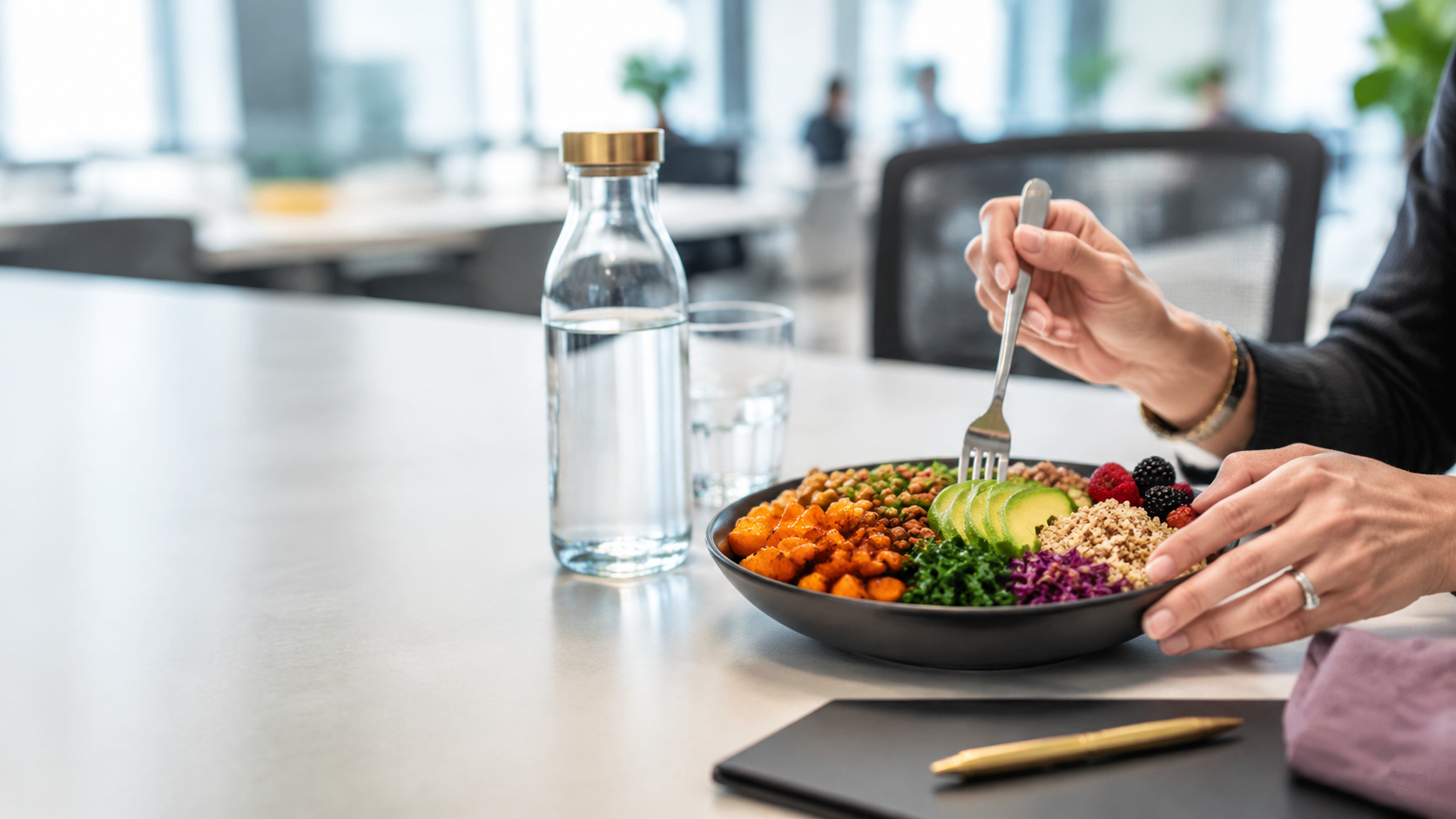
Real food for the modern worker is not about following a perfect diet or spending every Sunday preparing identical meals. It is about creating a simple, repeatable way to fuel your body during demanding workdays – so that convenience does not always make the decision for you.
Modern professionals often start early, move from meeting to meeting and eat whenever a gap finally appears. Breakfast becomes coffee, lunch happens at the desk and the afternoon is powered by sugar or another caffeine hit. These choices may solve hunger quickly, but they rarely create the steady foundation that a busy mind and body need.
The good news is that eating well at work can be practical. You do not need complicated recipes. You need a flexible system built around minimally processed foods, balanced meals and a few reliable defaults.
What does real food for the modern worker mean?
Real food generally means foods that are unprocessed or minimally processed and still resemble their original form. Think vegetables, fruit, whole grains, potatoes, beans, lentils, eggs, yogurt, fish, poultry, tofu, nuts, seeds, avocado and olive oil.
In practice, real food for the modern worker is about making the most nourishing option easier to repeat. This does not mean that every packaged food is automatically a poor choice. Frozen vegetables, canned beans, plain yogurt and whole-grain bread can all make a healthy workday easier. The goal is not purity. The goal is to make nutrient-dense foods the foundation of what you eat most of the time.
The World Health Organization’s healthy diet guidance emphasizes adequacy, balance, moderation and diversity, with a foundation of minimally processed foods. That is a useful framework for the workplace too.
Why real food for the modern worker matters
More stable energy
Real food for the modern worker supports a steadier routine. A pastry and coffee may feel efficient, but a meal that combines protein, fiber-rich carbohydrates and healthy fats is usually more satisfying. Balanced meals can help you avoid the cycle of intense hunger, rushed choices and another energy crash later in the day.
Better support for focus
Your brain is part of your body. Regular meals and hydration provide a more reliable foundation for concentration than repeatedly ignoring hunger and trying to compensate with stimulants. Food will not replace sleep or sensible workloads, but it is one part of a healthier performance system.
A smoother transition after work
When you arrive home extremely hungry, tired and under-fueled, it becomes harder to make intentional choices or enjoy your evening. A solid lunch and a useful afternoon snack can help protect the hours after work – including training, family time and recovery.
7 practical ways to eat better at work
1. Build a complete plate
A complete meal does not need to be fancy. Use this simple structure:
- Protein: eggs, Greek yogurt, chicken, fish, tofu, tempeh, beans or lentils.
- Plants: vegetables, fruit or ideally a combination across the day.
- Smart carbohydrates: oats, rice, potatoes, quinoa, whole-grain bread or other whole grains.
- Healthy fats: nuts, seeds, avocado or olive oil.
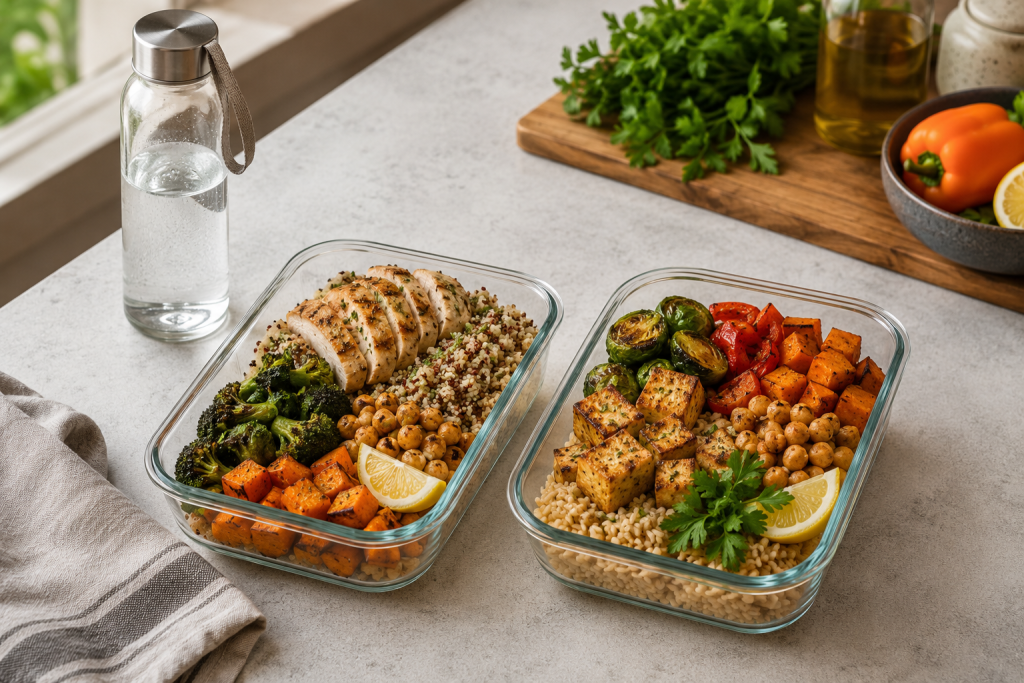
This framework gives you flexibility. A grain bowl, a substantial salad, a wrap, leftovers or even a supermarket combination can all work when the main components are present.
2. Choose two reliable lunches
For a packed schedule, real food for the modern worker becomes easier when two dependable lunch options are already defined.
Decision fatigue is real. Instead of searching for the perfect lunch every day, identify two options that are available near your workplace, easy to order and leave you feeling satisfied.
For example, one option might be a rice bowl with vegetables and a protein source. Another could be a whole-grain wrap with salad, yogurt and fruit. Reliable does not mean boring; it means you have a better default when the day becomes chaotic.
3. Keep an emergency food kit
On unpredictable days, real food for the modern worker can start with a small backup kit that prevents the schedule from making every decision.
Meetings run late. Deliveries get delayed. Plans change. Keep a small backup at work so that an unpredictable schedule does not automatically become a vending-machine lunch.
- Unsalted nuts or seeds
- Whole-grain crackers
- Fruit that travels well
- Plain instant oats
- Nut butter
- A shelf-stable protein option that suits your preferences
The purpose is not to replace every meal with snacks. It is to create a bridge until you can eat properly. This is what makes real food for the modern worker practical instead of rigid.
4. Make hydration visible
Within a real food for the modern worker routine, visible water is one of the simplest environmental prompts.
Water is easy to forget when attention is absorbed by screens and meetings. Keep a bottle or glass within sight, refill it at predictable moments and drink with meals. Linking hydration to existing routines – arriving at work, starting lunch or finishing a meeting – makes it easier to remember.
You do not need a complicated hydration challenge. You need water to be convenient and visible.
5. Protect your afternoon energy
A useful real food for the modern worker snack combines convenience with enough substance to bridge the afternoon.
If you regularly feel drained in the afternoon, look at the full pattern rather than blaming motivation. Did you skip breakfast? Was lunch mostly refined carbohydrates? Have you had any water? Have you moved away from your screen?
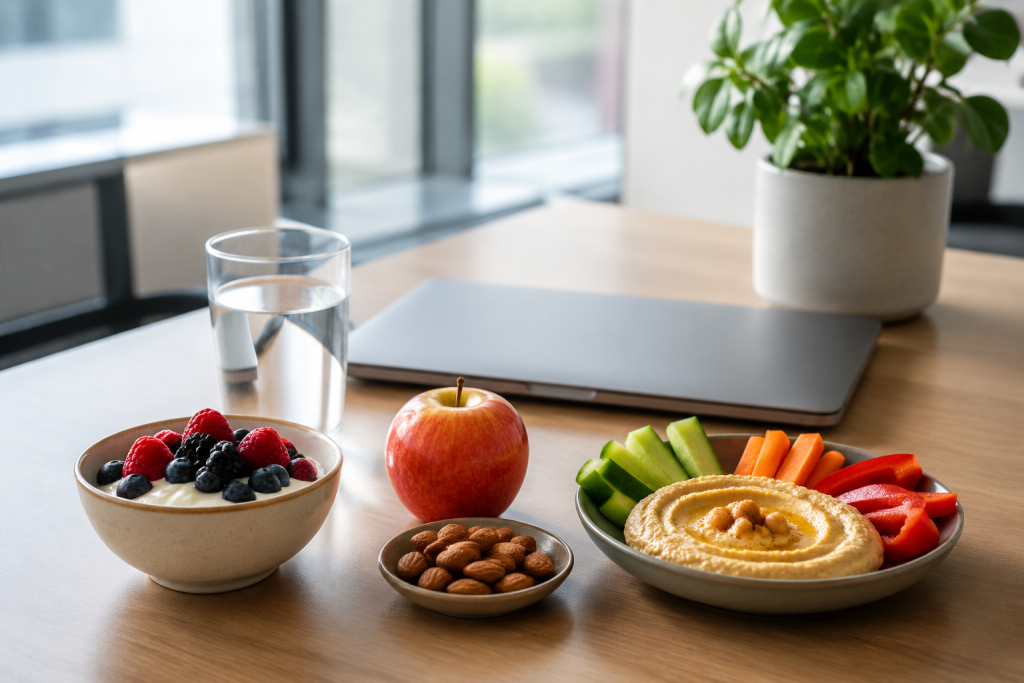
Try a balanced lunch, a brief walk after eating and a snack that combines protein and fiber, such as yogurt with fruit, hummus with vegetables or an apple with nuts. The aim is steady support, not a quick spike.
6. Use convenience strategically
Real food for the modern worker can still be convenient. Convenience can support health when you choose it deliberately. Frozen vegetables, pre-washed leaves, canned pulses, microwaveable whole grains, boiled eggs, plain yogurt and pre-cut fruit can reduce preparation time without removing nutritional value.
The CDC’s food service and nutrition guidance also highlights the importance of making healthier options accessible in places where people eat, including work settings. Environment matters: the easier a useful choice is, the more likely it is to become your default.
7. Upgrade one choice at a time
Trying to rebuild your entire diet on Monday usually creates more pressure than progress. Choose one change that would make your workday noticeably better:
- Eat a real breakfast three days this week.
- Add a protein source to lunch.
- Bring fruit instead of relying only on sweets.
- Keep water on your desk.
- Take a short walk after lunch.
Once that choice feels normal, add another. Sustainable nutrition is built through repeated actions, not short bursts of perfection.
Real food for the modern worker: a simple workday example
| Moment | Practical option |
|---|---|
| Breakfast | Oats with Greek yogurt, berries, nuts and seeds |
| Lunch | Rice or quinoa bowl with vegetables, avocado and your preferred protein |
| Snack | Fruit with yogurt, hummus or a handful of nuts |
| Hydration | Water available at your desk and with every meal |
This is only an example, not a rigid plan. Your culture, preferences, allergies, schedule and health needs matter. The best system is one you can adapt and repeat.
How organizations can support real food for the modern worker
Real food for the modern worker is not only an individual responsibility. Employers shape the environment in which choices are made. Organizations can help by offering adequate lunch breaks, accessible drinking water, useful cafeteria options, fruit or balanced snacks at meetings and a culture that does not reward eating at the computer every day.
Workplace wellbeing becomes more credible when healthy choices are supported by the system – not left entirely to willpower. Supporting real food for the modern worker is therefore both a personal and organizational opportunity.
Start with your next meal
A sustainable real food for the modern worker approach begins with the next useful choice. You do not need to wait for a new week, a quieter calendar or a perfect meal-prep routine. At your next meal, include a useful protein source, add a plant, choose a satisfying carbohydrate and drink some water.
That is the practical idea behind real food for the modern worker: simple choices that fit real life and support the person doing the work. Real food for the modern worker works best when the system is flexible enough for demanding days.
Frequently asked questions about real food for the modern worker
Does real food require daily meal prep?
No. Real food for the modern worker can include convenient options such as frozen vegetables, canned beans, plain yogurt, pre-cut fruit and microwaveable whole grains. Preparation helps, but useful defaults matter more.
Is eating real food at work expensive?
It does not have to be. A real food for the modern worker routine can be based on affordable staples such as oats, eggs, rice, seasonal produce, beans and lentils. Planning two reliable meals can also reduce impulse purchases.
What is the easiest place to start?
Choose the meal that causes the most difficulty and improve one component. The simplest real food for the modern worker upgrade might be adding protein to breakfast, vegetables to lunch or fruit and nuts as an afternoon snack.
At Berracos Fitness, we help people and organizations build realistic systems for movement, nutrition, recovery and sustainable wellbeing. Explore our approach and start becoming 1% better than yesterday.