
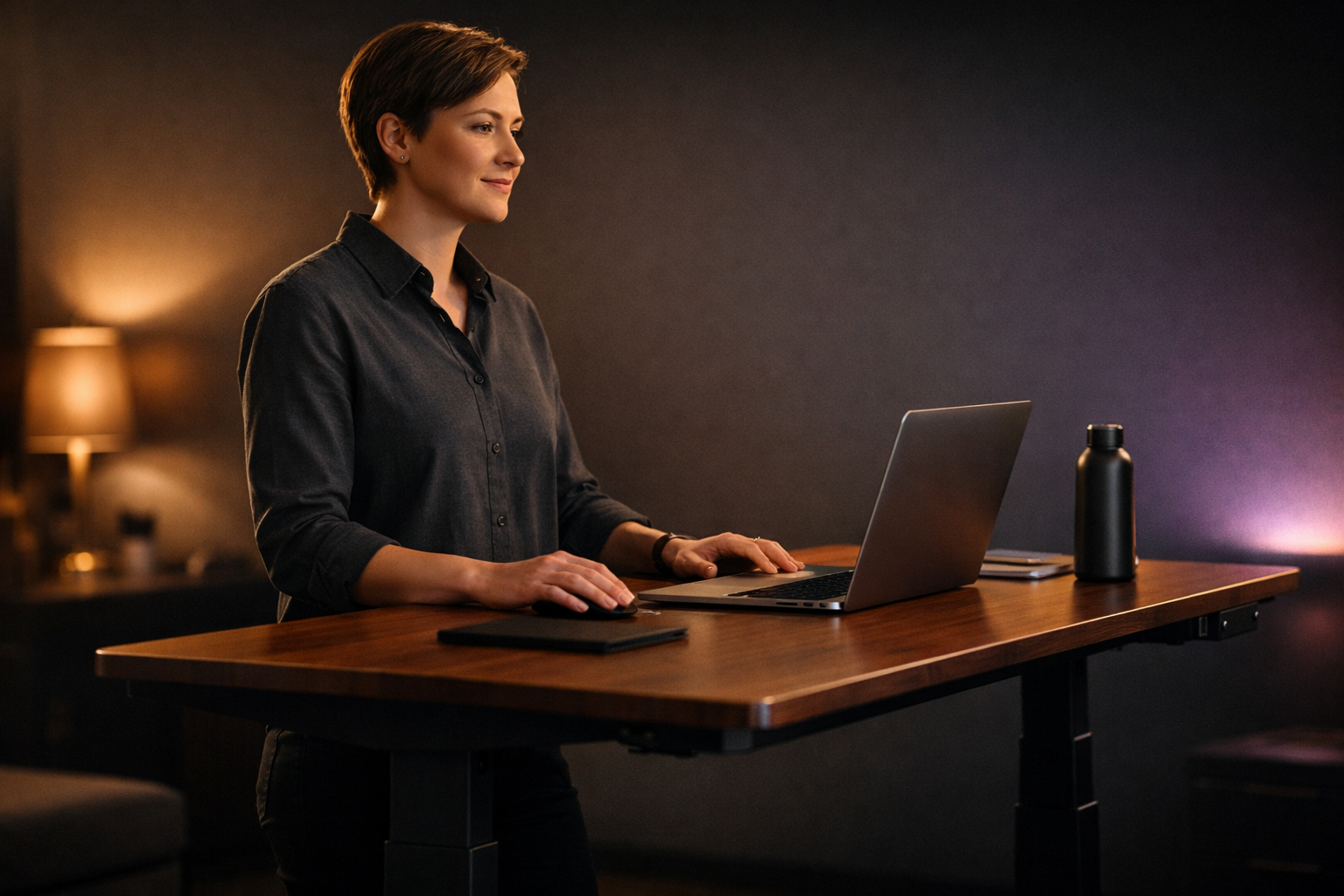
Standing Desk Benefits: How Reducing Sitting Can Help Lower Chronic Stress 🧠💻
Modern professionals are not just tired.
They are chronically stressed.
Long workdays, constant notifications, cognitive overload, and hours of uninterrupted sitting create a perfect storm that keeps the nervous system stuck in “on mode.” Over time, this state becomes what we call chronic stress—and it is one of the most underestimated health risks of modern work life.
👉 If you want a deep dive into this topic, read our full breakdown here:
🔗 Internal resource: Chronic Stress in the Modern Worker
https://www.berracosfitness.com/chronic-stress-modern-worker/
Standing desks are often marketed as a posture or productivity hack—but their real value goes deeper. When used strategically, they can become a stress-management tool, helping the body exit prolonged states of tension and inactivity.
Let’s break it down.
What is chronic stress (and why your desk matters)? ⚠️
Chronic stress is not about a bad day or a tough week.
It’s what happens when stress responses remain activated for weeks, months, or years without enough recovery.
🧠 Physiologically, chronic stress means:
-
Persistently elevated cortisol
-
Increased sympathetic nervous system activity (“fight or flight”)
-
Reduced parasympathetic tone (“rest and digest”)
-
Higher inflammation and metabolic strain
📌 You can explore this in more detail here:
🔗 External resource: What Is Chronic Stress & How Does It Affect the Body?
https://www.linkedin.com/pulse/what-chronic-stress-how-does-affect-body-emanuel-bisiglia-tgpaf/
Now here’s the key connection 👇
Prolonged sitting acts as a stress amplifier.
When you sit for hours:
-
Large postural muscles are inactive
-
Blood flow slows
-
Breathing becomes shallow
-
Brain fatigue increases
-
Recovery signals decrease
This doesn’t cause stress—but it keeps the body trapped in it.
The real standing desk benefits (beyond posture) 🔁✨
1️⃣ Reduced sedentary load = lower stress accumulation
Standing desks don’t “fix” stress.
They interrupt the conditions that sustain it.
By alternating between sitting and standing:
-
Muscle activity increases
-
Circulation improves
-
Neural input changes
-
The brain gets a subtle “reset”
This helps reduce the cumulative physiological load associated with chronic stress patterns.
Think of it as reducing background noise in your nervous system.
2️⃣ More posture variability = less mental fatigue 🧍♂️➡️🪑
Chronic stress thrives on rigidity—mentally and physically.
Standing desks introduce variability, which:
-
Reduces musculoskeletal tension
-
Encourages micro-adjustments
-
Improves body awareness
-
Prevents the “slumped + exhausted” end-of-day feeling
Many professionals report:
✅ Fewer afternoon crashes
✅ Better focus during calls
✅ Less neck and back discomfort
Not because standing is magical—but because changing position is regulating.
3️⃣ Standing makes movement easier (and movement regulates stress 🚶♀️🧠)
Here’s an overlooked truth:
👉 Standing is not the goal. Movement is.
Standing desks work best when they act as a gateway to NEAT (Non-Exercise Activity Thermogenesis):
-
Short walks
-
Stretch breaks
-
Mobility resets
-
Breathing pauses
-
Water refills
These micro-movements:
-
Activate the parasympathetic nervous system
-
Lower cortisol spikes
-
Improve emotional regulation
-
Reduce cognitive overload
This is crucial for stressed professionals who “exercise regularly” but remain exhausted.
Important reality check ⚠️
🚫 Standing all day is NOT healthy
🚫 Replacing sitting with prolonged standing can increase circulatory strain
🚫 More standing ≠ less stress automatically
The goal is balance and rhythm, not extremes.
🟡 Chronic stress improves when the body experiences:
-
Frequent posture changes
-
Light movement
-
Predictable breaks
-
Reduced rigidity
How to use a standing desk to reduce stress (practical protocol 🛠️)
🔹 The Sit–Stand–Move Rule
Use this simple structure:
🪑 Sit: 30–45 minutes
🧍 Stand: 15–20 minutes
🚶 Move: 2–5 minutes every 60–90 minutes
This rhythm:
-
Prevents nervous system overload
-
Improves blood flow
-
Supports mental clarity
-
Reduces stress accumulation across the day
Ergonomics that protect your nervous system ⚙️
Poor setup = more tension = more stress.
Quick checklist:
✔️ Elbows relaxed at ~90°
✔️ Screen at eye level
✔️ Shoulders down (not shrugged)
✔️ Feet stable + anti-fatigue mat
✔️ Breathe slowly while standing
Your desk should feel supportive, not demanding.
Who benefits the most from standing desks? 👥
Standing desks are especially effective for:
-
💻 Remote workers with long screen hours
-
🧠 Professionals with high cognitive load
-
😴 People with afternoon energy crashes
-
🔄 Anyone stuck in chronic stress loops
They are not a luxury item.
They are an environmental upgrade.
Standing desks don’t reduce stress by themselves.
They work because they:
✅ Reduce prolonged sitting
✅ Increase posture variability
✅ Encourage movement
✅ Support nervous system regulation
In a world where chronic stress is the norm, changing how you work is as important as how you train.
📥Download the free Berracos ebook available in this post to get a step-by-step system to reduce stress, improve energy, and build sustainable habits—plus an exclusive gift inside for those ready to change.
BERRACOS — 1% better every day. 💥
